




Last Updated: November 6, 2026
Quick Summary
Yes, knee surgery soreness is normal and expected because surgery disrupts the muscles around your knee. Most people see the sharpest pain fade within two to six weeks, while soreness and stiffness can linger for three to six months. Manage it with ice, elevation, gentle movement, and prescribed medication.
- Soreness often peaks 24 to 48 hours after physical therapy and then fades.
- Calf pain with warmth, redness, or swelling needs urgent evaluation to rule out a blood clot.
- Ice for 15-20 minutes after activity, always wrapped in a towel.
- Use heat before exercise to relax tight tissue and improve mobility.
- Start with ankle pumps, quad sets, heel slides, straight-leg raises, and short walks.
Table of Contents
- What Muscle Soreness After Knee Surgery Is Normal
- Muscle Soreness After Knee Replacement: Why Your Thigh and Calf Hurt
- How Long Does Pain Last After Knee Replacement?
- Pain Relief After Knee Replacement: Ice, Heat, and Medication Together
- Knee Replacement Recovery Exercises That Ease Soreness
- Choosing a Drug-Free Device for Home Recovery
- Frequently Asked Questions
What Muscle Soreness After Knee Surgery Is Normal
Managing knee surgery soreness starts with one clear fact: soreness is part of the healing process, not a sign it went wrong. The question people ask most is simple. Is this normal, or should I call someone?
Most of the time, it is normal. Your knee went through real trauma. Muscles were cut, stretched, and pushed aside. They will complain.
Here is what typical soreness feels like:
- A dull, aching throb in the thigh, calf, or around the joint
- Tightness that eases as you move
- Soreness that peaks a day or two after physical therapy
A Symptom-by-Symptom Decision Guide
Use this guide to sort what you are feeling into three buckets: manage at home, mention at your next visit, or seek urgent care. Symptoms alone cannot diagnose a complication, so when in doubt, call your care team.
Manage at home (expected soreness):
- Dull ache in the thigh or calf that improves with rest, ice, and gentle movement
- Tightness that loosens after a few minutes of walking or ankle pumps
- Soreness that peaks 24 to 48 hours after physical therapy and then fades
Mention at your next visit (monitor closely):
- Soreness that is steadily increasing over several days instead of easing
- New stiffness that limits range of motion more than the week before
- Swelling that no longer responds to ice and elevation
Seek urgent care (call your care team now):
- Calf pain with warmth, redness, or swelling, possible blood clot
- Shortness of breath or chest pain
- Fever above 100.4°F (38°C) or chills
Watch out: calf pain that comes with swelling and warmth can signal a blood clot, which is a medical emergency and needs urgent attention.
We group recovery pain into two buckets: soreness you manage at home, and symptoms that need a professional. Knowing which bucket you are in keeps you calm and safe. When you are unsure, err on the side of calling, your care team would rather answer a question than treat a complication.
Muscle Soreness After Knee Replacement: Why Your Thigh and Calf Hurt
Your thigh and calf hurt because the surgery disrupts the muscles that control your knee.
The calf aches for a different reason. Reduced movement slows circulation, so fluid pools and the muscle feels tight and heavy.
A common mistake is resting completely. Total stillness makes stiffness worse.
If leg heaviness and poor circulation are part of your recovery, our guide on how to improve circulation in legs at home covers simple daily habits that help.
The pain is not random. It tracks with what you did yesterday, how much you iced, and how well you elevated.
How Long Does Pain Last After Knee Replacement?
Most people see the sharpest pain fade within the first two to six weeks. Soreness and stiffness can linger for three to six months, and some tightness may come and go for a year. Recovery varies by procedure, health history, and clinician instructions, so treat any timeline as a general guide rather than a rule.
The timeline usually looks like this:
| Timeframe | What Most People Notice |
|---|---|
| Week 1-2 | Sharp pain, swelling, heavy soreness |
| Week 3-6 | Pain eases, stiffness remains |
| Month 2-3 | Soreness after activity, better range of motion |
| Month 6-12 | Occasional tightness, near-normal function |
Where Soreness Shows Up: A Muscle-by-Muscle Guide
Soreness location tells you something about which muscle is working hardest, but it cannot diagnose a complication. Use this as a map, not a diagnosis.
Targeted Heat + Cyclo-Therapy vibration for Deep Pain Relief →
- Quadriceps (front of thigh): The most common site after knee replacement because surgeons move this muscle group to reach the joint. Expect a deep ache after quad sets, straight-leg raises, and stair practice. Soreness here usually eases with ice and rest between sessions.
- Hamstrings (back of thigh): Often sore from heel slides and sitting-to-standing practice. Tightness here can limit knee bending, so gentle stretching after therapy helps.
- Calf: Aches from reduced circulation and fluid pooling when you are less mobile. Ankle pumps and short walks ease the heavy feeling. Watch out: calf pain with warmth, redness, or swelling needs urgent evaluation to rule out a blood clot.
A Week-by-Week Pacing Plan
Pacing is the difference between steady progress and a setback. A common pattern most practitioners recommend:
- Week 1: Focus on ankle pumps, quad sets, and short walks with support. Ice after activity. Rest often.
- Week 2: Add heel slides and straight-leg raises as tolerated. Increase walking distance slightly each day.
- Weeks 3-4: Build therapy consistency. Alternate activity with elevation. Expect soreness after sessions, that is normal.
Everyone heals at a different pace. Your age, fitness before surgery, and how closely you follow physical therapy all shift the timeline. The real difference between a smooth recovery and a rough one comes down to consistency. Small daily efforts beat occasional big ones.
Pain Relief After Knee Replacement: Ice, Heat, and Medication Together
Pain relief after knee replacement works best when you combine tools instead of relying on one.
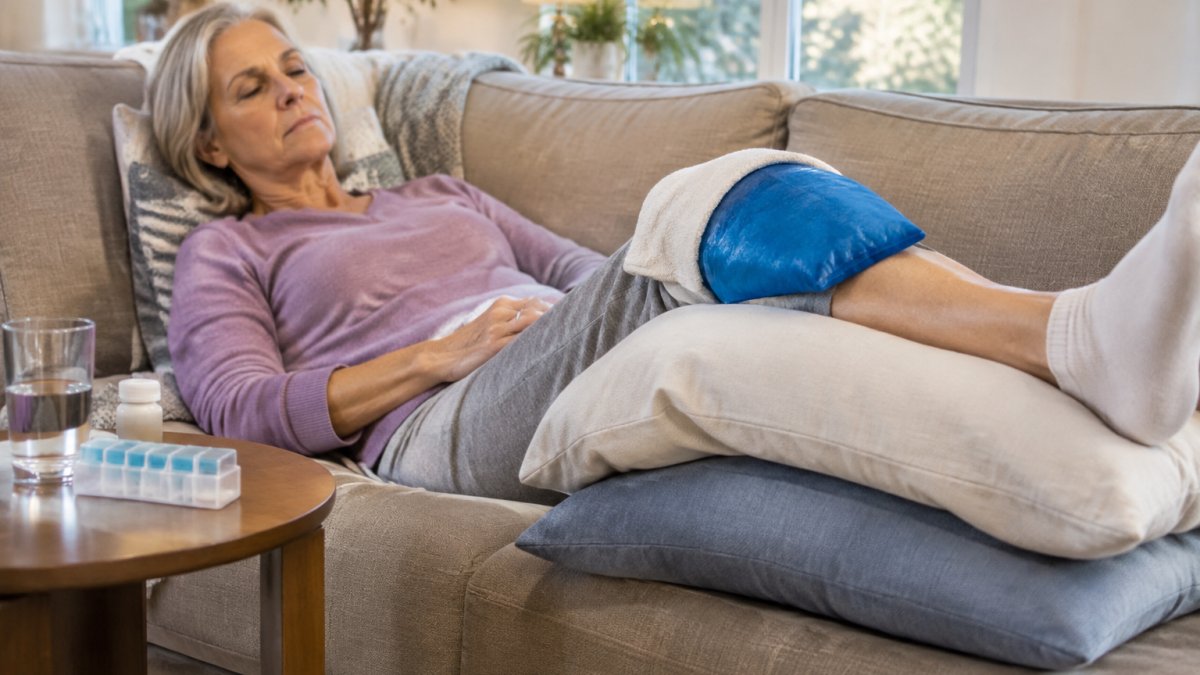
Here is how we would use each one:
- Ice: Use cold packs for 15-20 minutes after activity to calm swelling and inflammation. Always wrap them in a towel.
- Heat: Use heat therapy before exercise or when muscles feel stiff, to relax tight tissue and improve mobility.
- Medication: Take prescribed medication as directed by your doctor. Do not skip doses in the early weeks to "tough it out."
Cold therapy and heat therapy are not rivals. Cold calms a knee that is angry and swollen. Heat loosens a muscle that is tight and stiff.
For a drug-free option that pairs targeted heat with therapeutic vibration, the Thermo-Cyclopad heat and vibration therapy pad provides large-area heat and massage therapy.

Knee Replacement Recovery Exercises That Ease Soreness
Knee replacement recovery exercises ease soreness by rebuilding strength and restoring range of motion. The right movement helps more than rest alone.
Start with these gentle moves, guided by your physical therapist:
- Ankle pumps: Point and flex your foot to boost circulation.
- Quad sets: Tighten the thigh muscle, hold five seconds, release.
- Heel slides: Slide your heel toward you to bend the knee.
- Straight-leg raises: Lift the leg while keeping it straight.
- Short walks: Take brief, frequent walks with support.
Activity pacing matters here. Do a little, rest, then do a little more. Pushing through sharp pain sets you back.
A portable device like the handheld cyclo-therapy massager lets you target specific sore spots at home.

Choosing a Drug-Free Device for Home Recovery
A drug-free device helps you manage soreness between therapy sessions, on your own schedule. The right one should feel safe, be easy to use, and fit your recovery.
Use this checklist before you buy:
- Does it target the muscles around the knee, not just the joint?
- Can you control the intensity for sensitive post-surgical tissue?
- Is it portable enough to use daily?
- Does it offer heat, vibration, or both?
Our cyclo-therapy devices use proprietary cycloidal vibration to stimulate circulation and ease sore muscles.
Before you commit, it helps to review common questions about our therapy devices for usage guidance. And if you are weighing options, our article on managing knee pain at home walks through practical day-to-day relief.
Frequently Asked Questions
How long does muscle soreness last after knee replacement?
Most people notice the sharpest muscle soreness in the first two to four weeks, when the quadriceps and calf are working again after reduced movement. Soreness usually fades as swelling goes down and range of motion improves, though mild stiffness can linger for several months. Soreness that keeps improving week to week is expected. Soreness that gets worse, or comes with new swelling, redness, or fever, is not, and you should call your surgeon.
Is calf pain normal after knee surgery?
Mild calf soreness is common because you walk differently while the knee heals and the calf muscle tightens from reduced movement. Gentle ankle pumps and short walks help circulation. Calf pain that is sudden, one-sided, hot to the touch, or paired with swelling in the lower leg is different and needs urgent medical attention, because it can signal a blood clot. Do not massage a calf that shows those signs.
What helps with quadriceps pain after knee replacement?
Quadriceps soreness responds well to a mix of cold therapy for the first days after activity, elevation above heart level to move fluid out of the knee, and the prescribed exercises your physical therapist sets. Activity pacing matters: short, frequent sessions beat one long one. Once swelling has settled and your surgeon or therapist agrees, gentle heat and vibration therapy can help relax a tight thigh muscle and support flexibility before exercise.
When should I call my surgeon about pain after knee surgery?
Call your surgeon if pain suddenly gets worse instead of better, if the knee becomes hot, red, or more swollen, if you have a fever, or if you cannot bear weight when you could before. Also call about calf pain that is one-sided and swollen, or shortness of breath. These are warning signs, not normal soreness, and they need to be checked rather than managed at home.
Recovering from knee surgery takes patience, and soreness is a normal part of the road back. Niagarassage makes drug-free relief easier with portable cyclo-therapy devices that stimulate circulation, ease sore muscles, and support flexibility at home. Our heated Thermo-Cyclopad and handheld massager are built for daily recovery, backed by more than 75 years of clinic trust. Get started with Niagarassage and take control of your recovery soreness, one comfortable session at a time.


Also in News


Best Non-Pharmacological Sleep Aids for Seniors: A Comparison


The Complete Guide to Cycloidal Vibration Therapy for Muscle Recovery

